I didn’t plan to stop here.
Matera wasn’t even the main destination. Just one of those “we’ve got a few hours, let’s see it” kind of stops. Then you arrive and your brain goes quiet for a second. That doesn’t happen to me often.
I operate on people. Most of my life is spent in a room where every decision matters and the margin for error is measured in millimeters. You develop a real feel for structure, for what holds and what doesn’t. Matera holds. I don’t know how, but it does. These buildings weren’t built with computers. No safety margins. People just kept carving into the rock, stacking stone, figuring it out as they went along. And they’re still here. Still lived in. Still a vivid city in 2026, while so much of what we’ve built in the last thirty years is already coming apart.
That tells you something. I’m not sure exactly what. But it does. In the photograph, it’s all compression. Everything pushed together, layer on layer. The cathedral rises not because it’s the tallest thing, but because the town around it steps back just enough. I didn’t create that. I just found the angle where it was already happening. That’s the honest part of photography that nobody really says: you don’t create it. You just try not to miss it when it’s there.
The Italians seem to understand this in their bones. They don’t overcomplicate what already works. The food is simple. The days have their own steady rhythm. The afternoon pause is part of life. They’ve been making the same recipes for centuries and no one is bored.
I come from a world that’s always pushing for faster, better, more efficient. Every time I come to southern Italy, that whole way of thinking starts to loosen. Not in a big way. Just enough.
Like taking off a coat you forgot you were still wearing.
Matera did it in about twenty minutes.
-Maruša-
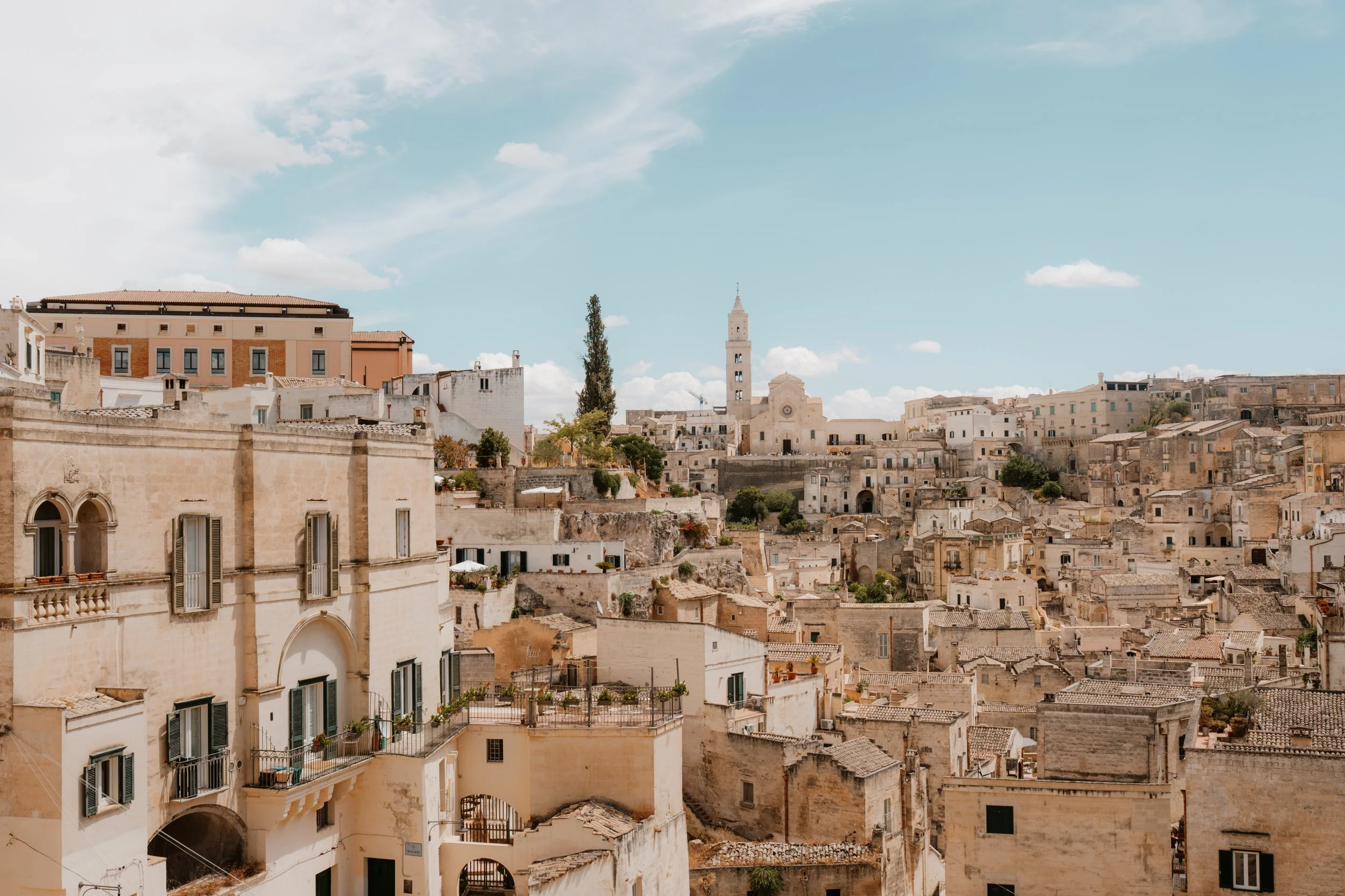
Sassi di Matera, 2025.
