Still Water, Stone City
This photograph always makes me laugh because I remember everything that happened after I took it much better than I remember taking it.
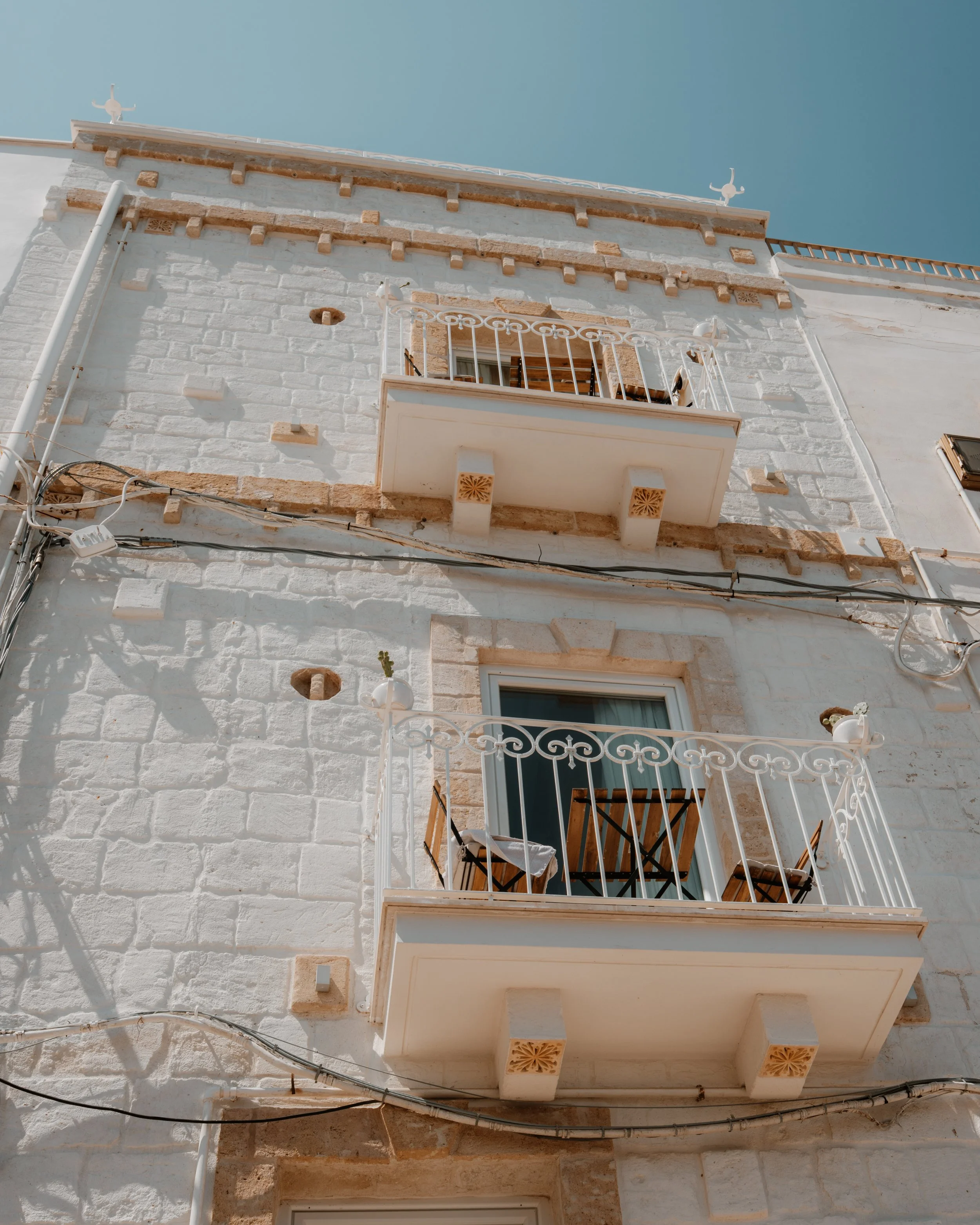
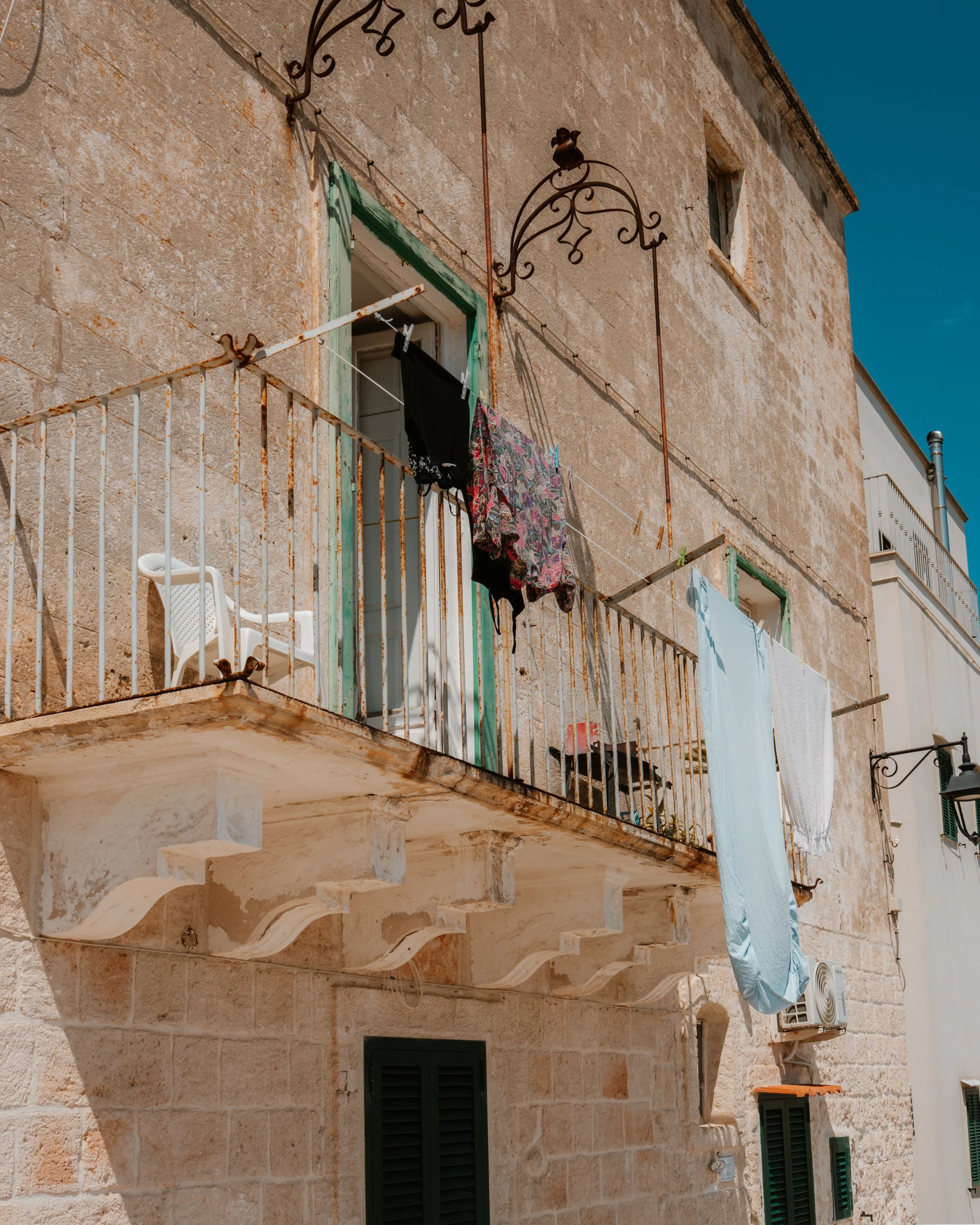
Monopoli was one of those places in Puglia where you spend half the day on the beach, convince yourself you'll remember where you parked because "it's obvious", and then discover that every street in the old town has secretly agreed to look exactly the same. We must have walked past the same balcony three or four times before admitting that none of us had the slightest idea where the car was.
The funny thing is that while we were trying very hard to find it, I kept getting distracted. There was an old man repairing something on his boat. Two ladies were talking from different balconies as if they were in the same room. Someone had left a chair outside a front door for no reason I could work out. Every time I thought I should probably concentrate on finding the car, something else caught my eye first.
That has been happening to me for as long as I can remember.
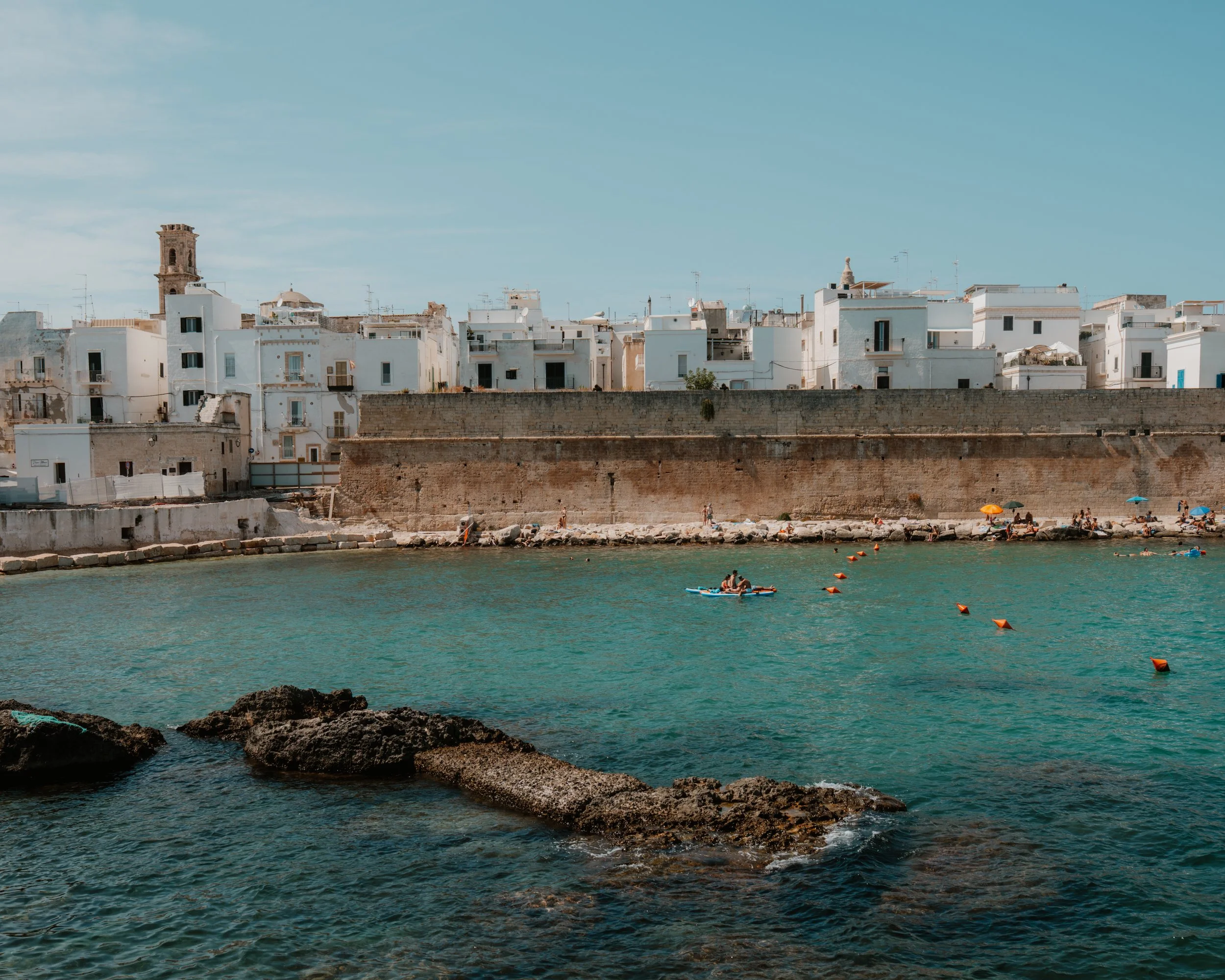
Monopoli, 2025.
When I was little, I disappeared at a summer camp in Medulin. I don't remember being frightened. I remember everybody else looking frightened when they eventually found me. I had wandered off because I had found something more interesting than the group. Apparently that wasn't considered a good plan. Looking back, I don't think much has changed. If you leave me in an old Mediterranean town, I'll probably still end up looking at boats instead of remembering practical things like where the car is. This harbour was one of those distractions.
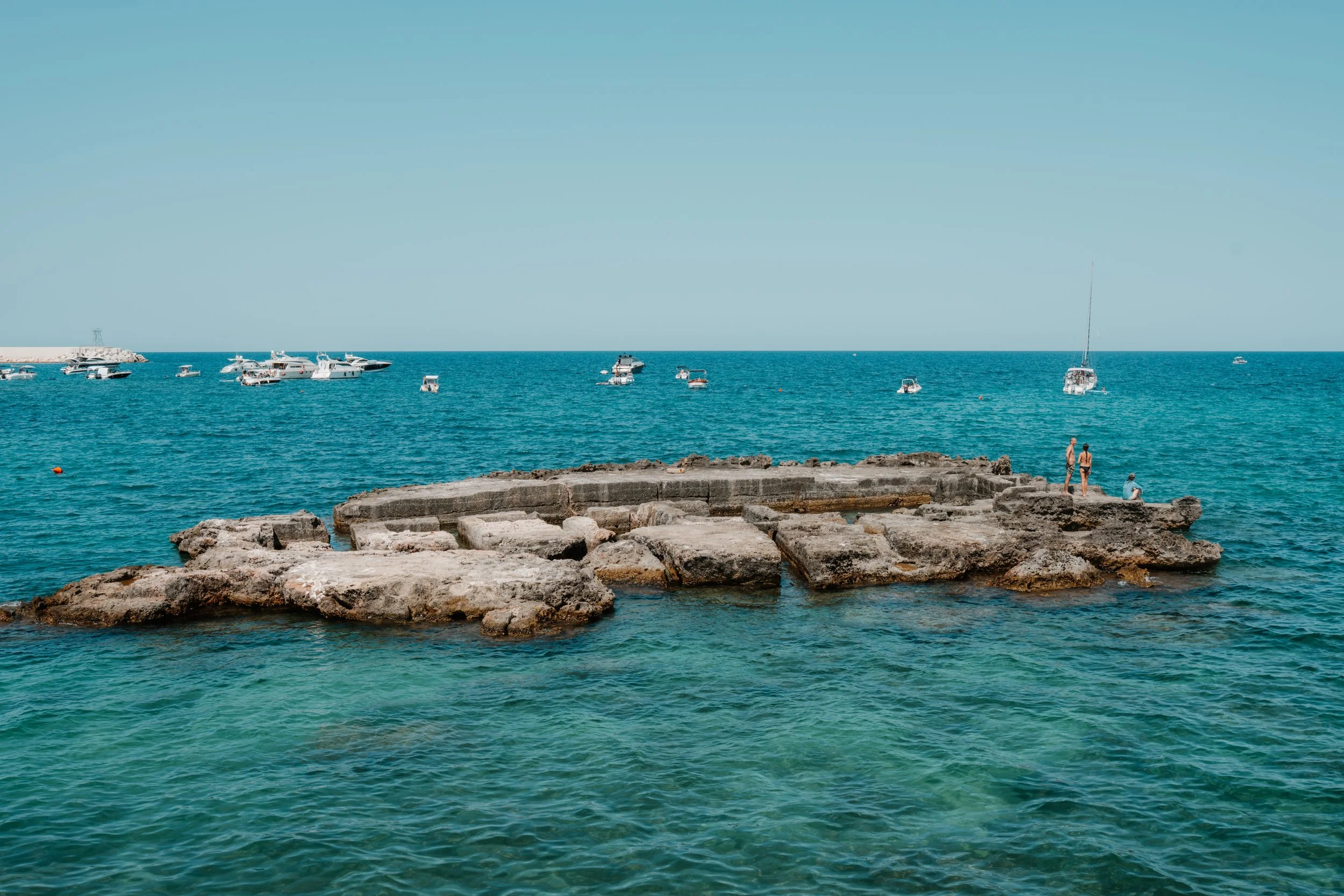
The water was completely still, which doesn't happen very often, and the reflection almost looked too neat to be real. I took one photograph, maybe two, and carried on walking because I was convinced we'd find the car in another minute or two. We didn't. It took considerably longer. The car, by the way, was parked exactly where we had left it. The problem was entirely human - me:) That's probably why I like this photograph. Most people see the blue water, the white stone and a quiet harbour in southern Italy. I see the beginning of forty minutes spent confidently walking in the wrong direction.
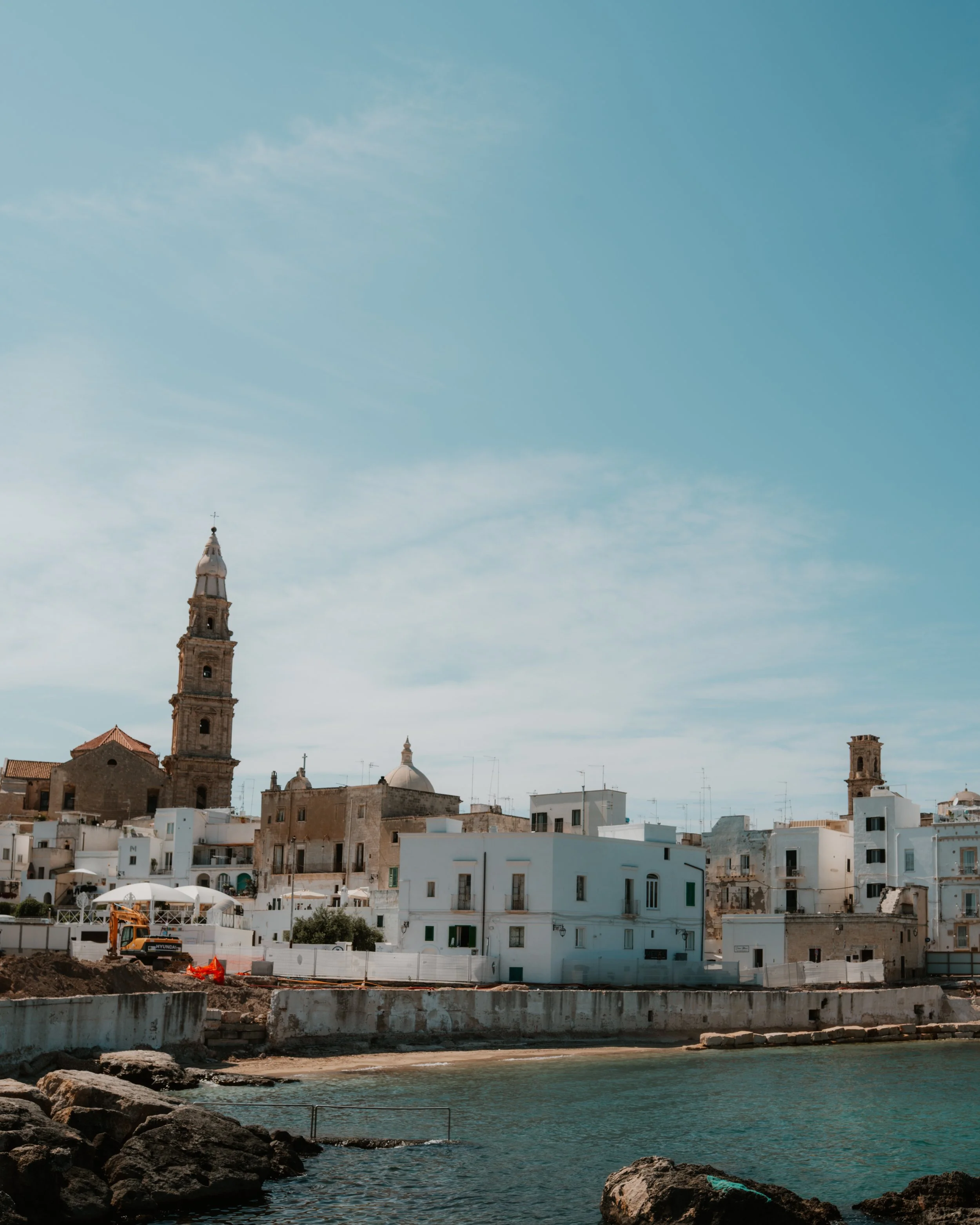
After finally finding the car, I realised that Monopoli is one of those places that rewards people who slow down. On the surface it looks like another beautiful town on the Adriatic coast, but after spending time there I began noticing the small details that make it feel different.
The first thing that surprised me was its name. It has nothing to do with the board game. The name comes from the Greek Monos Polis, meaning "single city", because for centuries it was the principal settlement along this part of the coast. Its position on the Adriatic made it an important trading port long before tourism arrived, and the harbour is still at the centre of everyday life.
One of the reasons I enjoyed walking around Monopoli so much is that it never feels like an open-air museum. Many historic towns become beautiful backdrops for visitors, but here people still seem to live exactly where they always have. Laundry hangs between buildings, neighbours talk across balconies, scooters squeeze through impossibly narrow streets, and someone is almost always carrying groceries home through the old town. It feels lived in rather than preserved.
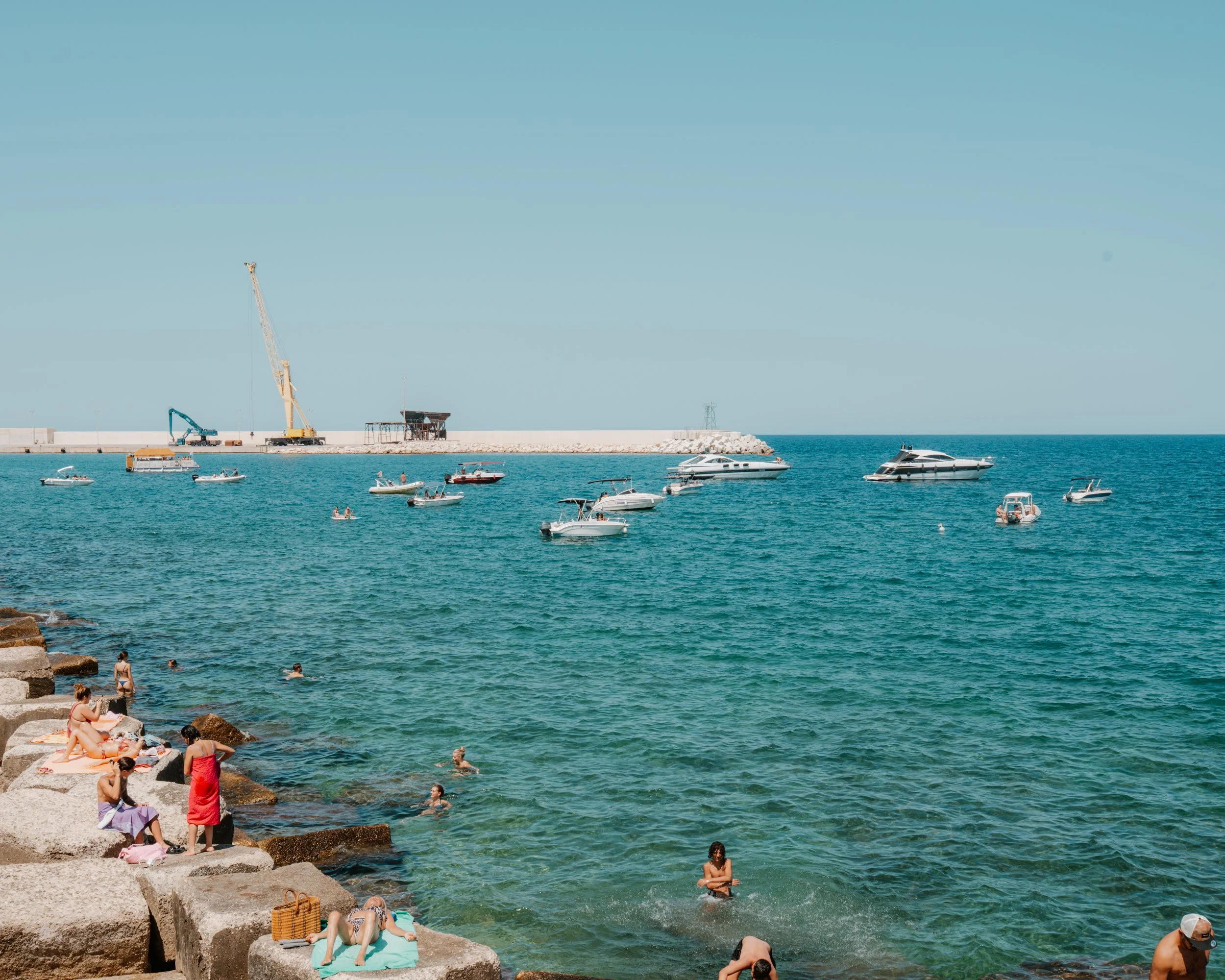
The harbour is another reminder of that. The colourful boats aren't arranged to look picturesque for visitors. Many of them still leave before sunrise and return with the day's catch. Restaurants buy fish that was in the sea only a few hours earlier. Fishermen repair nets while tourists photograph the reflections, and somehow both things happen naturally without getting in each other's way.
I also discovered that getting lost isn't entirely my fault.
Like many fortified Mediterranean towns, Monopoli developed as a maze. The narrow streets were designed centuries ago to make movement difficult for anyone unfamiliar with the town. Long before maps and mobile phones, confusing an enemy could be an advantage. Today the streets simply confuse photographers who are convinced they know exactly where they parked.
The white stone is another detail that gradually reveals itself. Early in the morning it carries cool blue-grey tones, by midday it almost glows under the southern Italian sun, and in the evening it turns warm and golden. The same street can look completely different only a few hours later, which is probably one reason photographers never seem to stop wandering.
Perhaps my favourite observation, though, was how close the sea feels to everyday life. In Monopoli the harbour doesn't feel separate from the town. Boats sit only a few metres from cafés, houses and front doors. Children jump into the water after school. Elderly men sit watching the harbour without appearing to be in any hurry. The sea isn't an attraction here. It's simply part of the neighbourhood.
Looking back at this photograph now, I realise I wasn't really photographing the reflections. I was photographing the feeling of slowing down enough to notice them.
And perhaps that's the biggest lesson Monopoli quietly teaches. The town isn't asking you to tick off landmarks or follow an itinerary. It asks something much simpler. Walk without rushing. Look into the side streets. Stop when something catches your eye. If you get lost, you'll probably find something worth remembering before you find your way back.
-Maruša-